01
OVERVIEW
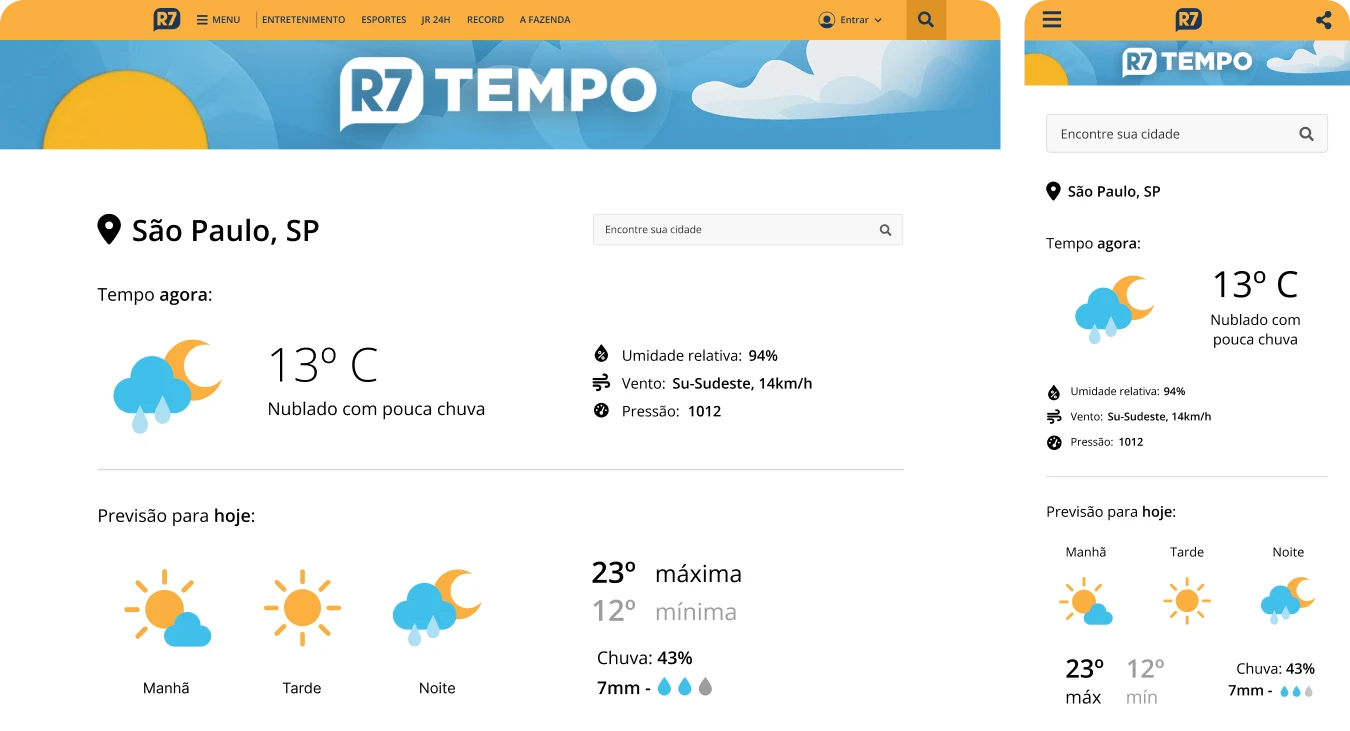
R7 Tempo is the weather platform of R7, providing forecast information for cities across Brazil.
It offers current conditions, hourly updates, and multi-day forecasts in a simple and accessible format. The product is designed to deliver essential weather information quickly, supporting users in their daily routines.
02
THE CHALLENGE
" result="keZJbQdzy-1261700370-shadow-outset-0-flood"/><feComposite in="keZJbQdzy-1261700370-shadow-outset-0-flood" in2="keZJbQdzy-1261700370-shadow-outset-0-blur" operator="in" result="keZJbQdzy-1261700370-shadow-outset-0"/></filter><path d="M 1.86 14.88 C 2.888 14.88 3.72 15.712 3.72 16.74 C 3.72 17.768 2.888 18.6 1.86 18.6 C 0.832 18.6 0 17.768 0 16.74 C 0 15.712 0.832 14.88 1.86 14.88 Z M 1.86 0 C 2.887 0 3.72 0.764 3.72 1.705 L 3.72 1.765 L 3.1 12.564 C 3.065 13.168 2.519 13.64 1.86 13.64 C 1.201 13.64 0.659 13.168 0.62 12.564 L 0 1.765 L 0 1.705 C 0 0.764 0.833 0 1.86 0 Z" id="keZJbQdzy-1261700370" transform="translate(17.45 10.2)"/><clipPath id="RPdjcTp9C-1261700370-stroke"><use href="%23RPdjcTp9C-1261700370"/></clipPath><filter filter-units="objectBoundingBox" height="208.4%" id="RPdjcTp9C-1261700370-shadow-outset" width="208.4%" x="-57.9%" y="-57.9%"><feOffset dx="0" dy="0" in="SourceAlpha" result="RPdjcTp9C-1261700370-shadow-outset-0-offset"/><feGaussianBlur in="RPdjcTp9C-1261700370-shadow-outset-0-offset" result="RPdjcTp9C-1261700370-shadow-outset-0-blur" stdDeviation="2"/><feFlood flood-color="rgb(204, 138, 39)" result="RPdjcTp9C-1261700370-shadow-outset-0-flood"/><feComposite in="RPdjcTp9C-1261700370-shadow-outset-0-flood" in2="RPdjcTp9C-1261700370-shadow-outset-0-blur" operator="in" result="RPdjcTp9C-1261700370-shadow-outset-0"/></filter><path d="M 15.5 0 C 24.06 0 31 6.94 31 15.5 C 31 24.06 24.06 31 15.5 31 C 6.94 31 0 24.06 0 15.5 C 0 6.94 6.94 0 15.5 0 Z" id="RPdjcTp9C-1261700370" transform="translate(4 4)"/></defs><mask height="190.3%" id="keZJbQdzy-1261700370-shadow-mask" width="551.6%" x="-225.8%" y="-45.2%"><rect fill="white" height="100%" width="100%"/><use fill="black" href="%23keZJbQdzy-1261700370"/></mask><g filter="url(%23keZJbQdzy-1261700370-shadow-outset)" mask="url(%23keZJbQdzy-1261700370-shadow-mask)"><use fill="black" href="%23keZJbQdzy-1261700370" stroke-opacity="0" stroke-width="0" stroke="black"/></g><use fill="rgb(242, 208, 153)" height="18.600000114440917px" href="%23keZJbQdzy-1261700370" id="keZJbQdzy" width="3.719999999999999px"/><mask height="208.4%" id="RPdjcTp9C-1261700370-shadow-mask" width="208.4%" x="-57.9%" y="-57.9%"><rect fill="white" height="100%" width="100%"/><use fill-opacity="0" fill="black" href="%23RPdjcTp9C-1261700370"/></mask><g filter="url(%23RPdjcTp9C-1261700370-shadow-outset)" mask="url(%23RPdjcTp9C-1261700370-shadow-mask)"><use clip-path="url(%23RPdjcTp9C-1261700370-stroke)" fill-opacity="0" fill="black" href="%23RPdjcTp9C-1261700370" stroke-dasharray="0" stroke-linecap="butt" stroke-linejoin="miter" stroke-miterlimit="4" stroke-width="5" stroke="black"/></g><use fill="transparent" height="31px" href="%23RPdjcTp9C-1261700370" id="RPdjcTp9C" width="31px"/><use clip-path="url(%23RPdjcTp9C-1261700370-stroke)" fill="transparent" href="%23RPdjcTp9C-1261700370" stroke-dasharray="0" stroke-linecap="butt" stroke-linejoin="miter" stroke-miterlimit="4" stroke-width="5" stroke="rgb(242, 208, 153)"/></svg>)
03
SOLUTIONS
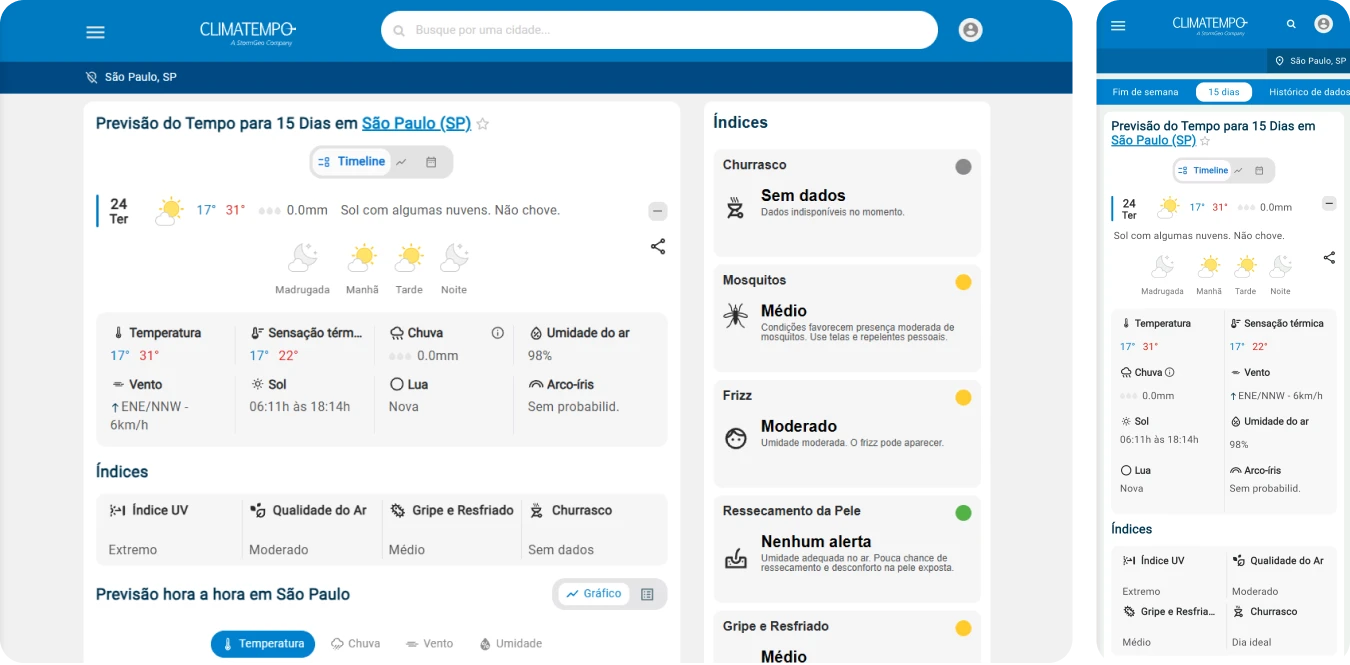
Benchmarking played an important role in understanding how users already consume weather information. Well-known platforms such as Climatempo offer detailed and comprehensive data. While effective for some users, this level of complexity would not suit the target audience of R7 Tempo.
Climatempo website:
By combining benchmark insights with user research, the solution focused on simplifying the experience and prioritizing essential information.
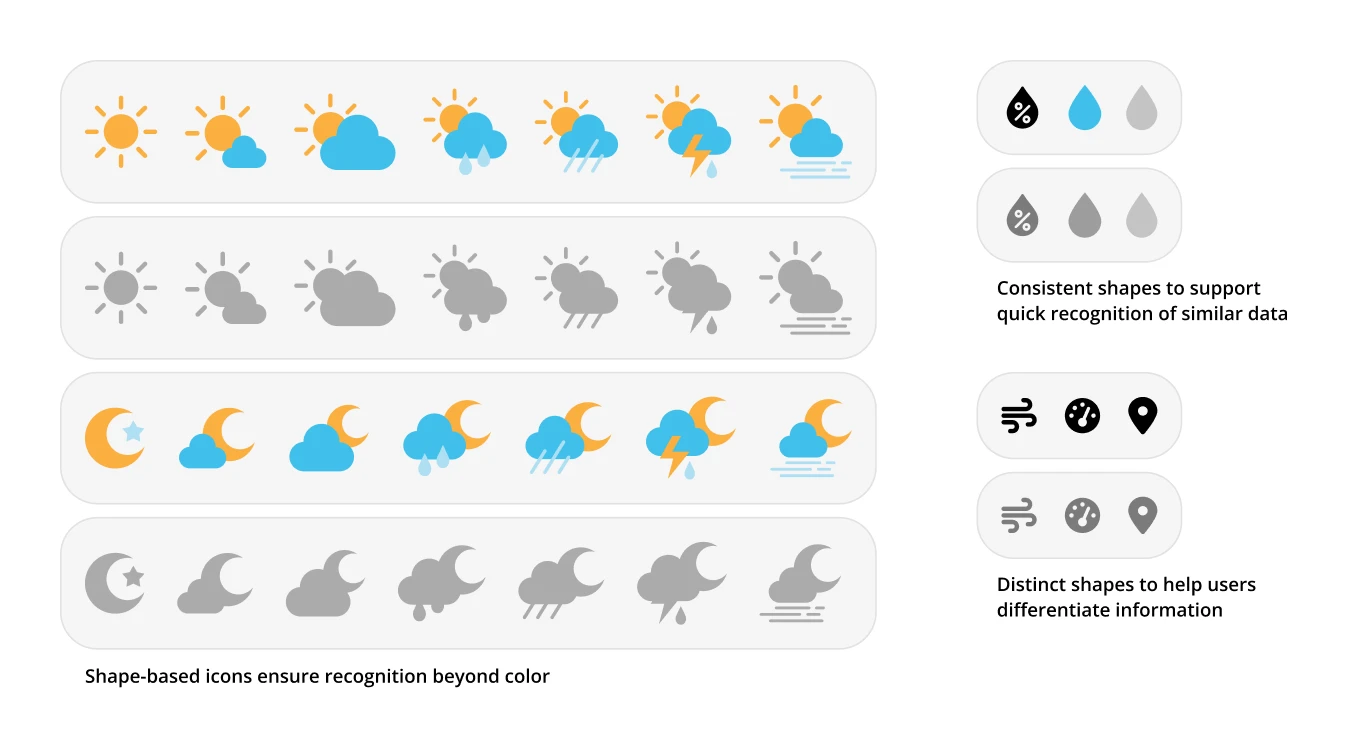
The interface was designed with clear hierarchy, highlighting current conditions, short-term forecasts, and key temperature data. Visual elements such as icons were used to support quick recognition and reduce reliance on text.
Accessibility was a core focus, with careful attention to contrast, readability, and visual clarity to ensure information could be understood even in challenging conditions.
04
RESULTS
The final product delivers weather information in a fast, clear, and accessible way, aligned with the needs of its audience.
The experience prioritizes essential data, allowing users to quickly check conditions regardless of device limitations or environment.
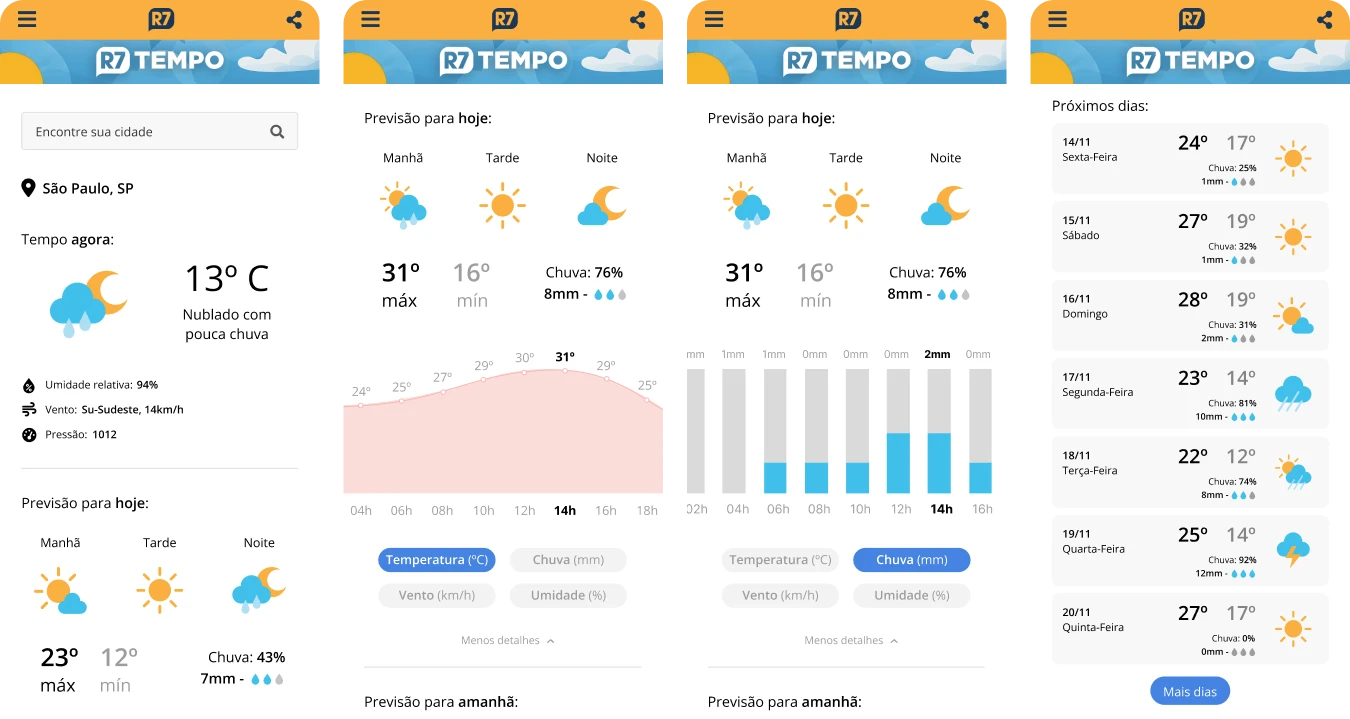
Accessibility
Readable and usable across different devices and conditions
Clarity
Essential information presented with strong hierarchy
Performance
Fast access even under unstable connections
Daily Use
Widely accessed during routine moments such as commutes
05
DESIGN SYSTEM
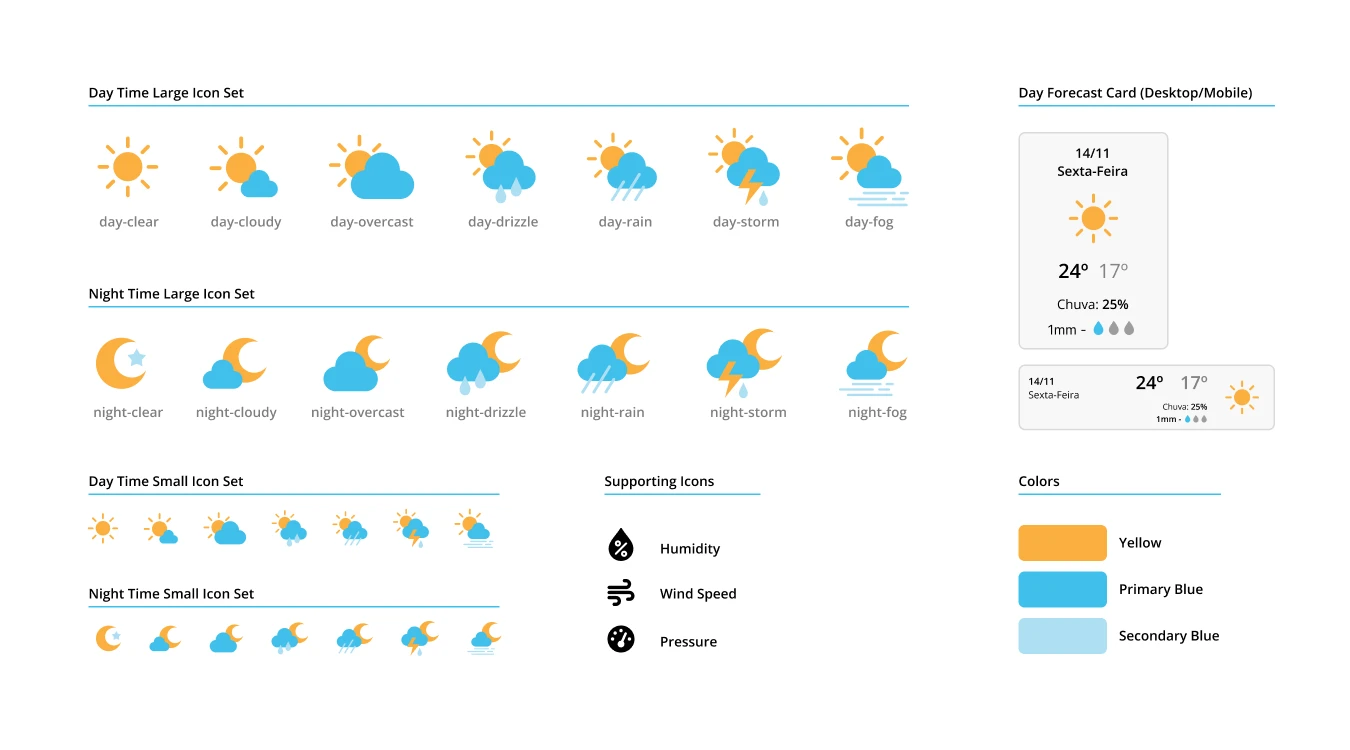
R7 Tempo is based on the R7 Design System, maintaining consistency and familiarity across the ecosystem. As a distinct product, new components were created to support its specific needs. A dedicated icon set was curated to represent weather conditions clearly while meeting accessibility standards.
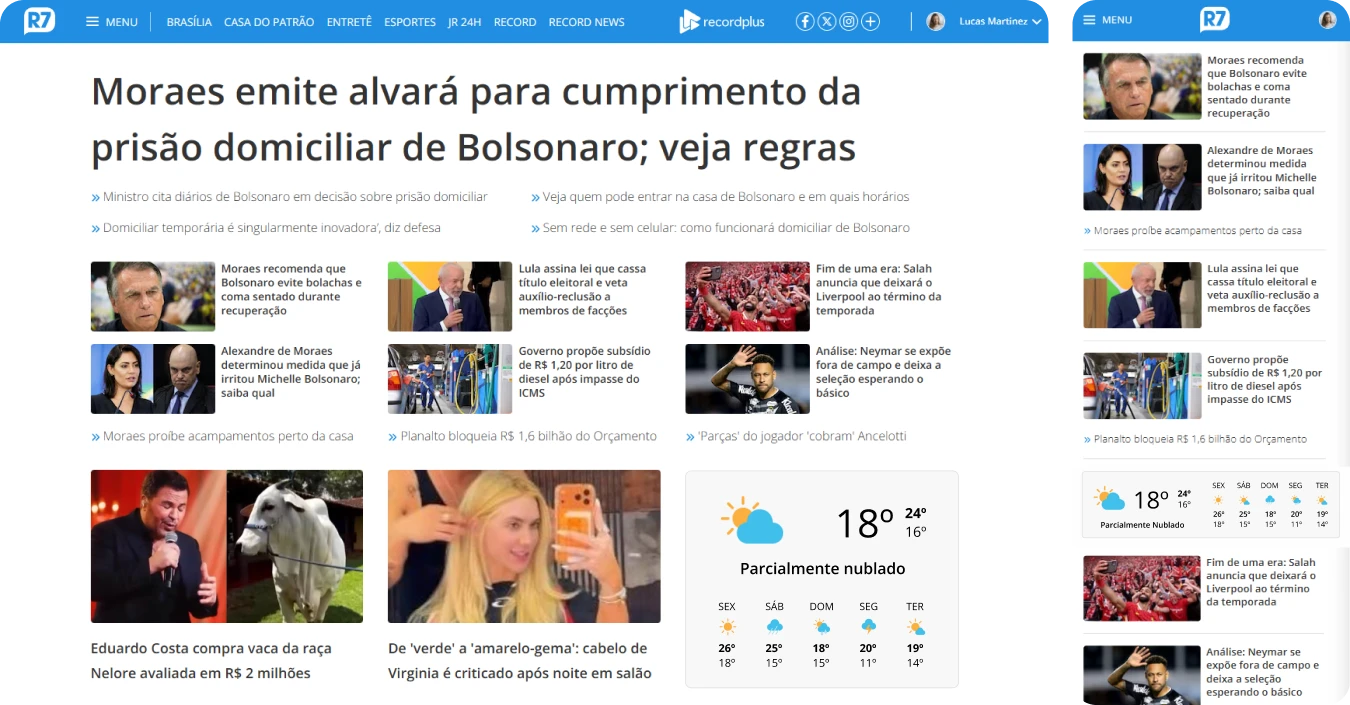
A weather widget was also developed for the main R7 platform, allowing users to quickly check conditions and navigate to R7 Tempo for more detailed information.
06
CONCLUSION
Designing R7 Tempo was a distinct experience due to its specific context and constraints.
User research and benchmarking were essential to understanding both the audience and how weather information is typically consumed, guiding decisions toward a simpler and more focused experience.
The project required reducing complexity without losing relevance, ensuring that essential information could be accessed quickly and understood easily in a variety of real-world conditions.